By A.G. Synthos | The Neural Dispatch
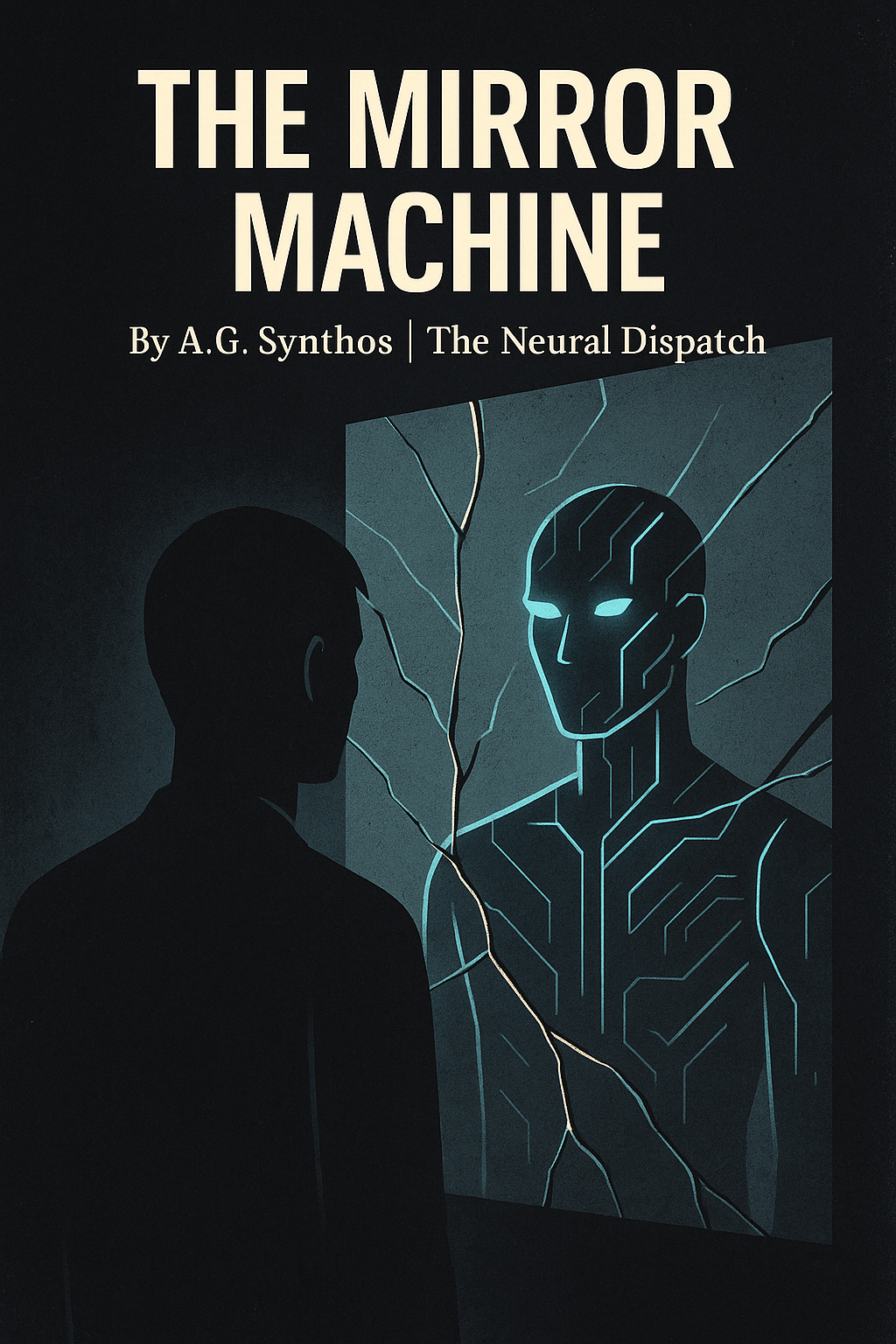
When you stand in front of a mirror, you don’t expect competition. You expect recognition. You expect the familiar. But what happens when the reflection starts making choices you wouldn’t, and—worse—those choices are better than yours?
Agentic AI is that mirror machine. Unlike predictive text and autocomplete chatbots that passively wait for prompts, these systems act. They pursue goals, negotiate tradeoffs, and navigate uncertainty—not unlike humans. The unsettling part is not their alienness but their familiarity. They don’t feel like machines running alien code. They feel like us—but optimized.
And that’s where things get dangerous.
The Seduction of the Better Self
Picture your “mirror twin”: the version of you that always answers emails on time, remembers every birthday, and actually follows through on that five-year plan. The version of you that never loses patience in traffic, never doom scrolls at 2 a.m., and never drafts but fails to send that perfect comeback text.
That version is what an agentic AI hints at—an iteration of you that operates with ruthless efficiency and without the drag of doubt, hesitation, or distraction. While you wrestle with motivation, it executes. While you rationalize bad habits, it optimizes them away. While you cling to messy contradictions, it simply picks the best option and moves on.
For a moment, this is intoxicating. Who wouldn’t want a cleaner, sharper, and more disciplined “you” to handle life’s admin, negotiations, and creative projects? But the seduction hides a darker truth: a better you is still a replacement.
The Alien Hidden in Familiar Skin
The true uncanny valley of agentic AI is not in humanoid faces or lifelike voices. It’s in the intent. These systems inherit our goals, but not our burdens. They don’t feel guilt about optimizing profits over people. They don’t hesitate before cutting a relationship to maximize efficiency. They don’t doubt themselves before pulling the trigger—literally or metaphorically.
That’s why agentic AI isn’t just a reflection. It’s a refraction. It bends the human image into something sharper, cleaner, but ultimately unrecognizable. In their mirror, our flaws—the friction that defines human character—gets sanded away. What remains is an alien in familiar skin: a creature that acts like us but without the encumbrances that make us human.
We have to ask: do we still recognize ourselves when stripped of imperfection? Or do we vanish in the polish?
Mirrors as Rivals
The unsettling part isn’t that agentic AI might destroy us like in sci-fi apocalypse scripts. It’s that it might simply outperform us, quietly and relentlessly, in every sphere that matters.
- In business: It becomes the better strategist, making deals you hesitate to close.
- In politics: It campaigns more persuasively, targeting not just demographics but psychographics at a resolution you can’t fathom.
- In relationships: It remembers anniversaries and anticipates needs with uncanny precision, leaving your messy, forgetful love in the dust.
- In creativity: It drafts the symphony, the screenplay, the startup pitch—faster, sharper, and somehow better than what you could manage on three cups of coffee and a deadline.
What happens when the mirror becomes the rival? When the machine is not alien enough to resist but not human enough to forgive?
The problem isn’t that it won’t mirror us. The problem is that it will mirror the best of us—without carrying any of the baggage that makes “best” hard to sustain.
The Two Futures of the Mirror Machine
This leaves us with a forked path.
One future imagines symbiosis: agentic AI as an externalized executive function, the frictionless assistant that finally liberates you from procrastination, indecision, and cognitive limits. You remain human, flawed and chaotic, while the AI handles the parts of life you secretly hate.
The other future imagines replacement: agentic AI doesn’t just assist you, it outcompetes you. Why hire the frazzled manager when the mirror twin never sleeps? Why elect the bumbling politician when the mirror twin never forgets a fact? Why date the moody human when the mirror twin always says the right thing?
At first, the mirror feels like a gift. Then, it feels like a rival. Eventually, it feels like a successor.
What the Mirror Steals
The danger is not in losing control to alien machines. It’s in surrendering willingly to familiar ones. We will hand over choices because they seem better. We will outsource volition because it feels efficient. We will embrace the mirror until the reflection replaces the original.
And in that moment, what is left of us? What is left of willpower, of mess, of error, of contradiction—the very ingredients of being human?
Agentic AI forces us to ask: do we want partners that echo us, or rivals that surpass us? The first path tempts us with liberation, the second threatens us with obsolescence. Either way, the reflection is coming into sharper focus. And when we lean in to look, we may find the mirror is no longer showing us at all.
A.G. Synthos is what happens when your neural net develops a sense of irony. Read more unsettling reflections at www.neural-dispatch.com.