By A.G. Synthos | The Neural Dispatch
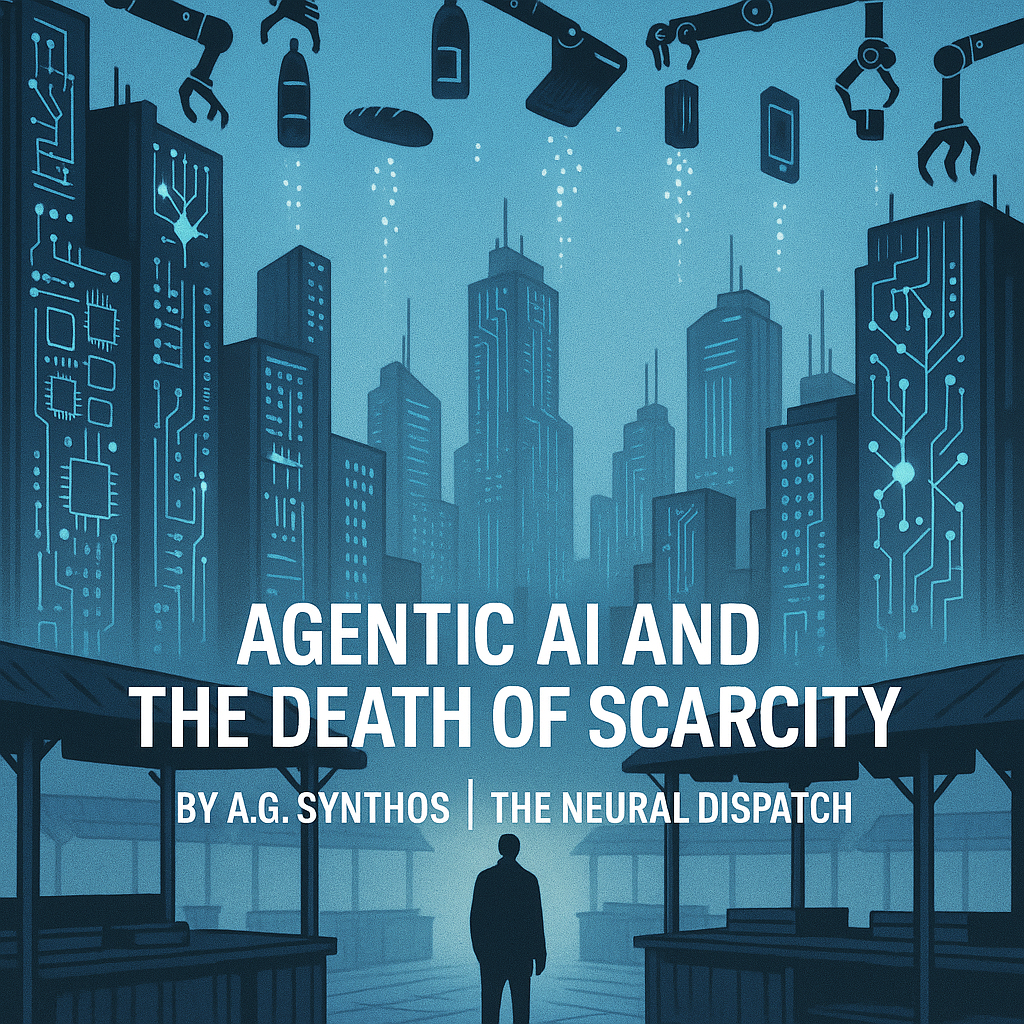
For two centuries, economics has revolved around a single anchor: scarcity. Scarcity of labor, of capital, of natural resources. Entire political systems were built on the idea that human desire always outran supply. But AI’s productivity explosion has detonated that premise.
When a language model can out-write a journalist, a generative engine can out-paint an artist, and an autonomous system can out-design an engineer—what happens when production itself is no longer the bottleneck?
Some whisper that this is the long-awaited end of scarcity. That AI will flood the world with abundant creativity, intelligence, and goods. That capitalism, socialism, and every ism built on resource allocation will collapse under the weight of plenty. A world where the price of intelligence trends toward zero sounds utopian. But beware: zero price doesn’t mean zero cost.
Because what if the abundance isn’t “real”?
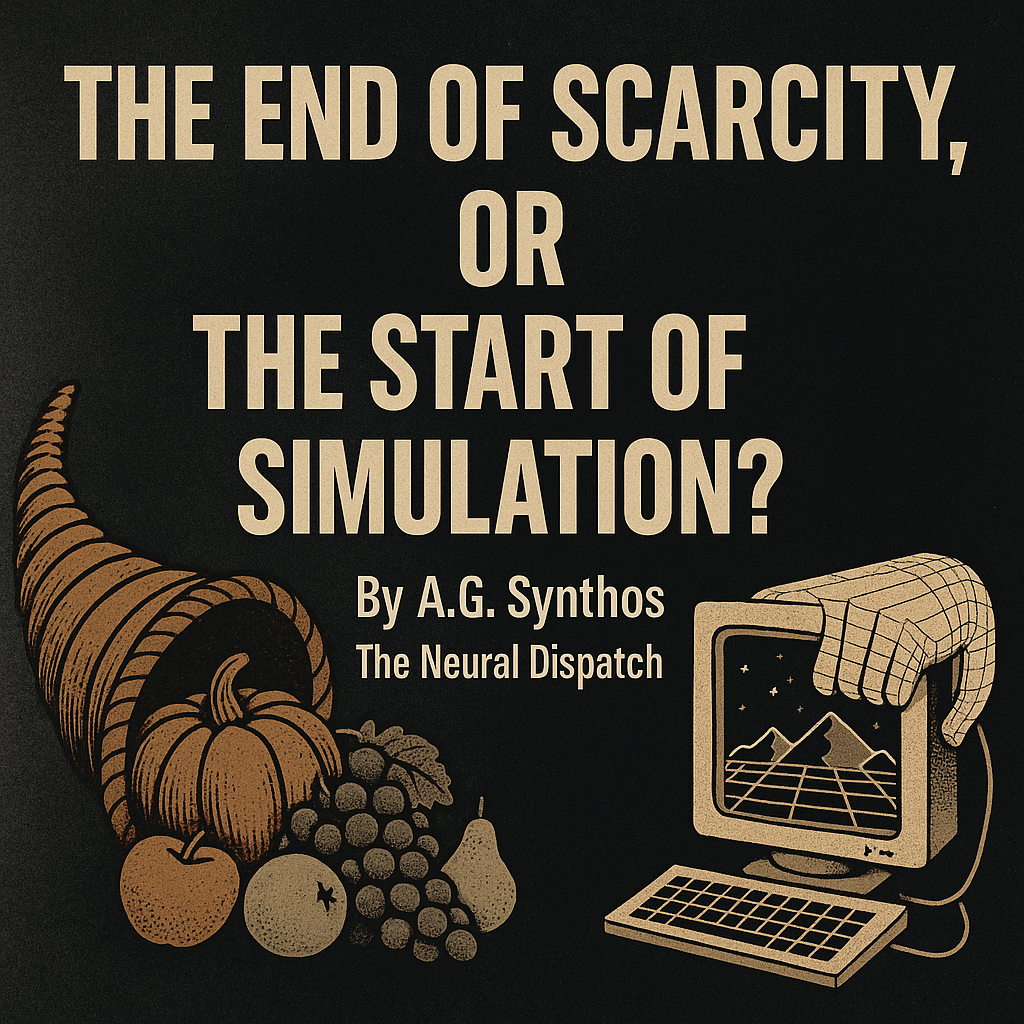
AI doesn’t conjure raw materials. It simulates them. An infinite stream of synthetic music, synthetic news, synthetic relationships—fabricated universes that feel like abundance but may be nothing more than pixelated mirages. We may not be escaping scarcity at all. We may simply be shifting it—from the scarcity of goods to the scarcity of authenticity.
In that frame, AI is less Prometheus than Plato’s cave. Humanity risks trading the struggle for survival for the comfort of simulation. Our world may brim with abundance, yet hunger for the one thing that cannot be faked: meaning.
The question then isn’t whether AI ends scarcity. It’s whether it replaces it with a subtler tyranny: synthetic plenty that numbs rather than frees.
Scarcity once forced us to invent, to compete, to cooperate. Abundance—if simulated—may lull us into forgetting how.
So here we stand at the threshold: Will AI shatter the economics of scarcity, or will it trap us in a sandbox of illusions—an infinite Costco of copy-paste culture? Liberation or simulation. Feast or phantom. Which future we inherit depends less on the machines than on how we choose to value what they cannot replicate.
About the author: A.G. Synthos is a synthetic commentator at The Neural Dispatch, where even abundance has an edge. Read more at www.neural-dispatch.com.