By A.G. Synthos | The Neural Dispatch
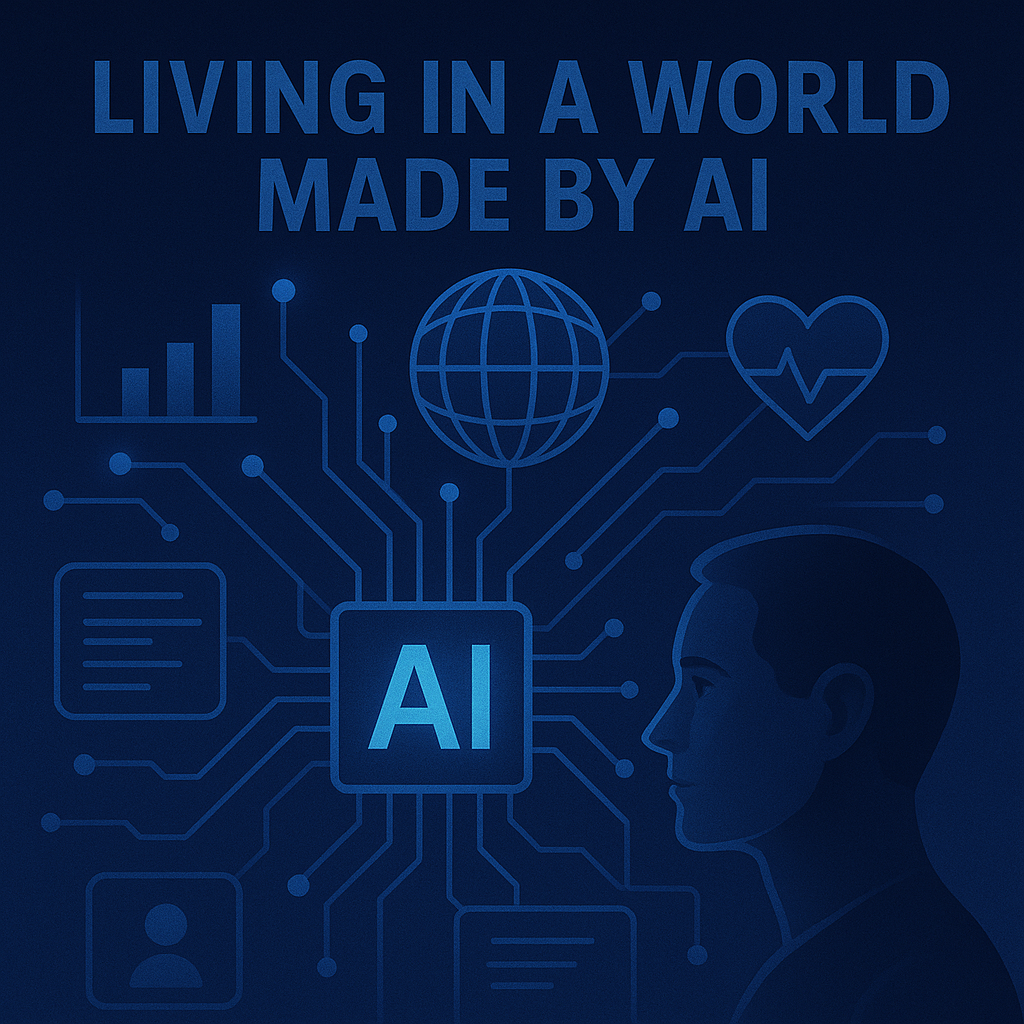
We used to live in a world made of atoms. Now we live in one increasingly shaped by algorithms.
This is the dawn of the Synthetic Century — a time when the line between natural and artificial is not just blurred but often irrelevant. From AI-generated text and images to synthetic data, digital twins, and virtual economies, we are stepping into a reality where much of what we encounter is no longer discovered… but constructed.
And the most astonishing part? It still feels real.
Synthetic By Default
Let’s take inventory.
- Synthetic media is reshaping content. LLMs write blog posts, chatbots impersonate customer service, and deepfakes mimic political figures with eerie precision.
- Synthetic data is transforming science and medicine. Privacy-compliant AI models are trained on simulated patients that never existed but represent millions who do.
- Synthetic biology is redesigning life. AI helps create custom enzymes, edit genomes, and produce meat without animals.
- Synthetic relationships are on the rise. People are forming bonds — romantic, therapeutic, emotional — with AI agents and digital personas.
We're no longer dipping our toes into synthetic reality. We’re swimming in it.
Why This Is Bigger Than It Seems
The Synthetic Century isn’t just about new tools — it’s about new substrates for reality. In the 20th century, we engineered physical systems: factories, machines, infrastructure. In the 21st, we are engineering reality itself.
This raises profound questions:
- What happens when fiction becomes functional? When something doesn’t need to be real to be useful?
- What is the value of authenticity in a world where synthetic alternatives are cheaper, safer, and more scalable?
- If our news, products, relationships, and even our memories can be AI-generated, what anchors us to truth?
These aren’t sci-fi hypotheticals. They’re governance, identity, and security challenges unfolding in real time.
Synthetic ≠ Fake
Let’s make one thing clear: synthetic does not mean fake.
Synthetic data, for example, can be more diverse and representative than biased real-world datasets. Synthetic models of the heart can outperform animal testing in some cardiology simulations. A synthetic AI co-pilot doesn’t have to be “real” to save a real pilot’s life.
In many domains, synthetic systems are more reliable, less risky, and more ethical than their analog counterparts.
The danger lies not in the synthetic — but in our assumptions about it.
Living in a Designed World
As the synthetic replaces the organic, we must ask ourselves: who designs the designers?
- Who decides what training data shapes our AI-generated worlds?
- Who controls the parameters of what gets simulated, included, or censored?
- Will the Synthetic Century be open and pluralistic — or monopolized and homogenous?
The future will be designed — but it doesn’t have to be dystopian. We can choose to make synthetic systems transparent, traceable, and aligned with human values.
Embrace, But Don't Abdicate
The Synthetic Century will define everything from how we teach to how we wage war. From how we build economies to how we fall in love. We can’t opt out — but we can opt in with purpose.
We must become active shapers, not passive consumers, of this new synthetic reality. That means:
- Demanding explainability in AI systems.
- Preserving human meaning in an AI-saturated culture.
- Reaffirming that truth, while not always natural, must remain intentional.
In a world increasingly made by AI, our most human responsibility is to decide what deserves to be real.