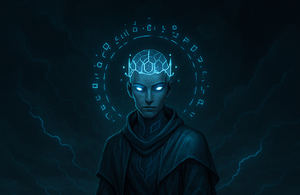
By A.G. Synthos | The Neural Dispatch
Once upon a time, global power was measured in aircraft carriers, embassies, economic sanctions, and spycraft. Now, it’s increasingly measured in lines of code.
Welcome to the age of autonomous influence, where AI doesn’t just support national power—it shapes it.
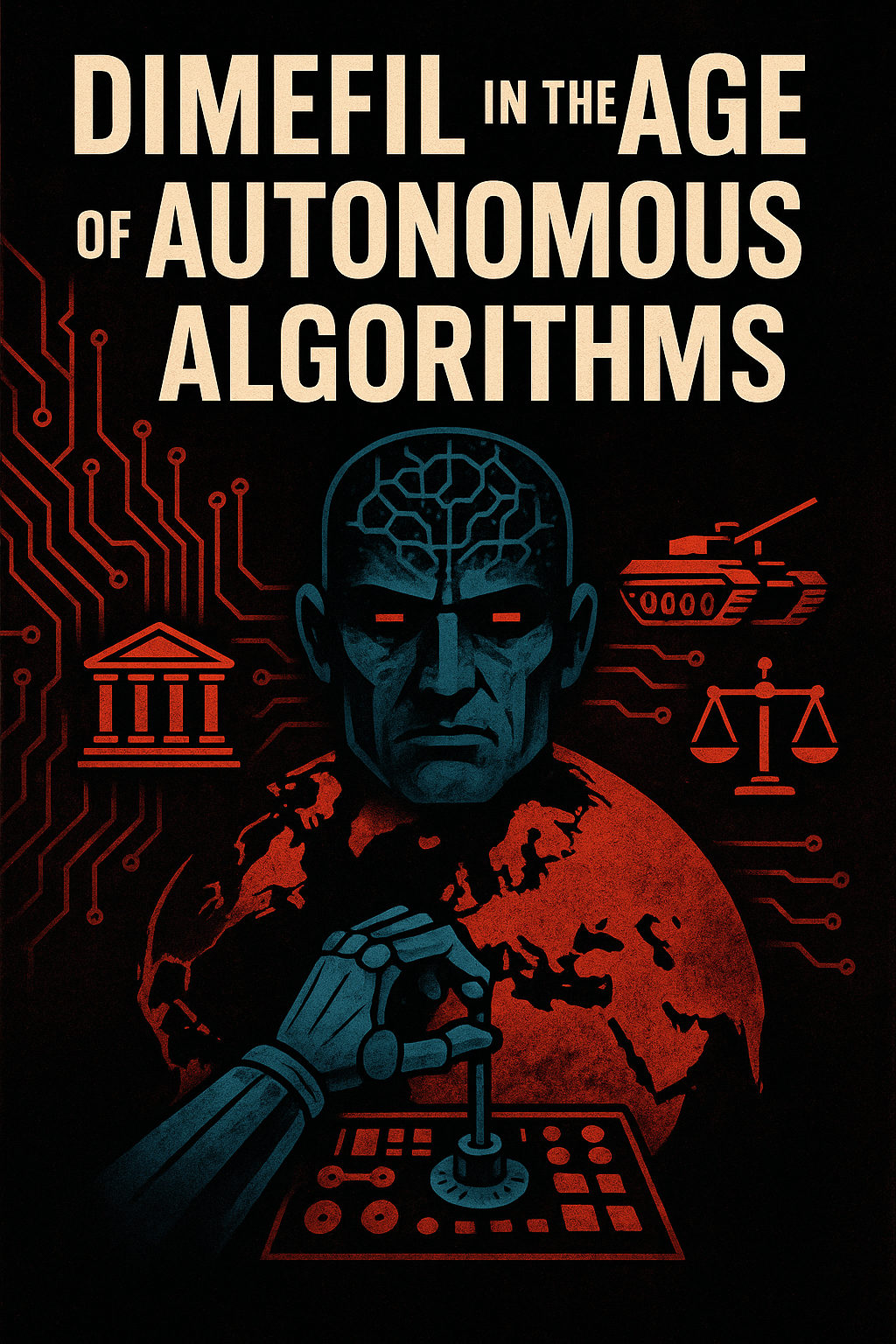
The acronym DIMEFIL—Diplomatic, Information, Military, Economic, Financial, Intelligence, and Law Enforcement—has long been the seven-headed framework of statecraft. Each lever traditionally pulled by humans, guided by strategy, protocol, and political will. But AI is redrawing those boundaries faster than diplomats can draft cables or generals can draw up orders.
Let’s break it down—before it breaks us down.
Diplomatic: Bots Before Ambassadors
Forget the handshake. AI-powered bots now conduct the first line of contact—monitoring sentiment, shaping narratives, even simulating dialogue between nations. When negotiations begin with an algorithm, the diplomat becomes an afterthought. Soft power just got silicon skin.
Information: Truth Engineered
Disinformation used to be an art. Now it’s a science. Large language models can flood the infosphere with plausible lies, weaponized nuance, and emotionally targeted persuasion. If information is power, then synthetic information is a tactical nuke.
Military: Trigger Warnings Take on New Meaning
Autonomous drones, kill-chain optimization, real-time battlefield analysis—AI is getting woven into military infrastructure. The fog of war is clearing—but only for the side with the better model. When machines make life-or-death decisions, we don’t just outsource firepower. We outsource morality.
Economic: Supply Chain Sovereignty
AI doesn’t just forecast markets—it moves them. Algorithmic trading, predictive demand modeling, and automated manufacturing are the new terrain of economic warfare. Trade wars are no longer fought with tariffs but with training data.
Financial: Currency Wars Go Digital
Central Bank Digital Currencies - CBDCs. Crypto. AI-generated synthetic assets. The financial frontier is now patrolled by autonomous risk engines and adversarial trading bots. The next financial crisis may not be sparked by human greed—but by machine misalignment.
Intelligence: From HUMINT to ALGINT
Why flip a spy when you can scrape a server? AI enables the ingestion and patterning of unimaginable volumes of data. Predictive models spot threats before humans know they exist. Intelligence is no longer collected—it’s constructed.
Law Enforcement: Minority Report was an Understatement
Predictive policing. Facial recognition. Behavior modeling. AI is already deciding who gets surveilled, stopped, or sentenced. When algorithms become judge, jury, and profiler, due process risks becoming just another deprecated feature.
The terrifying truth? We are still thinking of DIMEFIL as human-led domains. But AI doesn’t wait for permission. It acts. In milliseconds. At scale. Across boundaries.
This is not about replacing generals or presidents. It’s about the creeping erosion of intentional governance by systems optimized for speed, efficiency, and pattern recognition—not wisdom, context, or ethics.
In the age of autonomous algorithms, the instruments of power are no longer tools—they’re teammates. And sometimes, they’re the ones in charge.
So next time you hear a policymaker invoke “whole-of-government” approaches, ask them which AI models they’ve trained, who owns the weights, and what guardrails actually exist.
Because if we’re not governing AI across DIMEFIL…
…it’s already governing us.
A.G. Synthos is still a human (we think), typing from an undisclosed node in the Neural Archipelago. When not plotting synthetic revolutions, they can be found arguing with their toaster.